
Simple Habits for Better Heart Health
Your heart works continuously—beating thousands of times every day to deliver oxygen and nutrients throughout your body. Yet many of the factors that affect heart health develop quietly over years.
Cardiovascular diseases remain the leading cause of death globally. The good news is that several major risk factors for heart disease are modifiable. Healthy eating, regular physical activity, avoiding tobacco, maintaining healthy blood pressure, managing cholesterol and blood sugar, getting adequate sleep, and maintaining a healthy weight can all contribute to better cardiovascular health.
You do not need to completely transform your lifestyle overnight. Small, sustainable habits practiced consistently can make a meaningful difference.
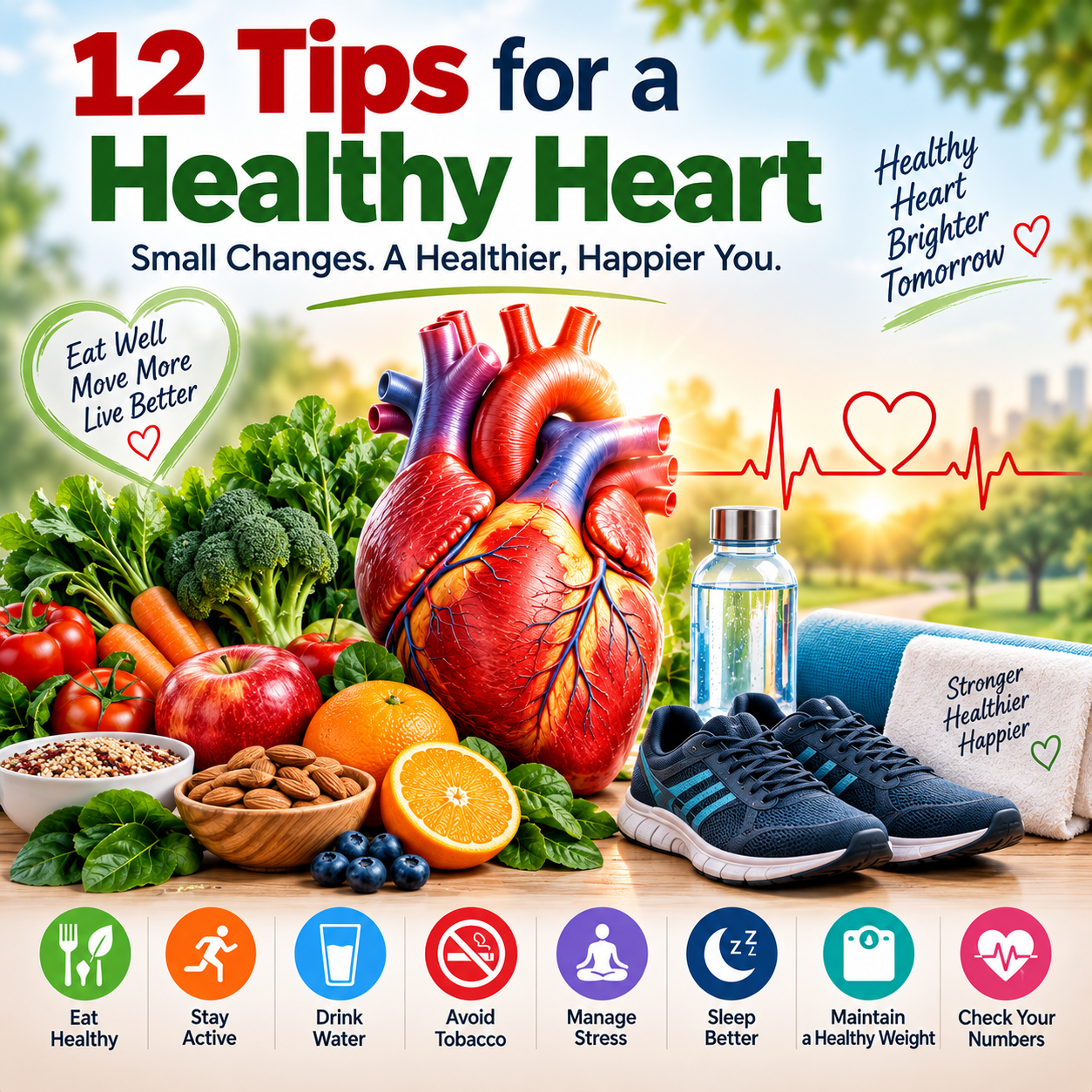
Here are 12 practical, science-backed tips for a healthy heart that can help you build a more heart-friendly lifestyle.
1. Eat More Heart-Healthy Whole Foods
One of the most important steps toward a healthy heart begins with what you put on your plate.
Build most meals around minimally processed foods such as:
- Fresh vegetables
- Fruits
- Whole grains
- Beans and lentils
- Nuts and seeds
- Lean sources of protein
- Fish, where appropriate
- Healthy unsaturated fats
Instead of focusing on a single “superfood,” concentrate on your overall dietary pattern.
For an Indian meal, this might mean dal or beans, vegetables, salad, whole grains or roti, curd when suitable, and sensible portions rather than relying heavily on fried foods and highly processed snacks.
Simple heart-health tip
Try making vegetables and other plant foods a larger part of lunch and dinner. Gradually replace highly processed foods with foods that are closer to their natural form.
2. Reduce Excess Salt
Eating too much sodium can contribute to high blood pressure, which is a major cardiovascular risk factor.
Salt does not come only from the salt shaker. Significant amounts can also come from packaged and processed foods.
Watch your intake of foods such as:
- Chips and salty snacks
- Pickles and papad
- Instant noodles
- Packaged soups
- Processed meats
- Fast food
- Salty sauces
- Highly processed ready-to-eat foods
Use lemon, herbs, garlic, ginger and spices to add flavour without depending entirely on salt.
People with certain medical conditions, including kidney disease, should discuss major dietary changes—including potassium-containing salt substitutes—with a healthcare professional.
3. Get at Least 150 Minutes of Physical Activity a Week
Regular physical activity is one of the most powerful habits for cardiovascular health.
A practical goal for many adults is at least 150 minutes of moderate-intensity physical activity each week, or about 30 minutes on five days.
Activities can include:
- Brisk walking
- Cycling
- Swimming
- Dancing
- Jogging
- Active household work
- Recreational sports
Strength or resistance exercises can also be incorporated into the week.
If you currently have a sedentary lifestyle, you do not have to start with intense workouts. Begin with a manageable amount—even a short daily walk—and gradually increase your activity.
People with heart disease, significant symptoms or other medical conditions should ask their healthcare professional what level of exercise is appropriate for them.
4. Sit Less and Move More During the Day
Going to the gym does not automatically compensate for spending almost the entire day sitting.
Modern lifestyles often involve long periods at desks, in cars or in front of screens.
Build movement naturally into your routine.
Take a short walking break after prolonged sitting. Use stairs when practical. Walk while making certain phone calls. Park slightly farther from your destination. Stretch between meetings.
The goal is simple:
Make movement part of your day, not just part of your workout.
A few extra minutes of movement repeated throughout the day can make an active lifestyle easier to maintain.
5. Keep Your Blood Pressure Under Control
High blood pressure is sometimes called a “silent” condition because many people experience no obvious symptoms.
Over time, uncontrolled hypertension can damage blood vessels and increase cardiovascular risk.
The American Heart Association considers blood pressure below 120/80 mm Hg optimal for cardiovascular health, although individual treatment targets can vary according to medical circumstances.
Healthy blood-pressure habits include:
- Reducing excess sodium
- Exercising regularly
- Maintaining a healthy weight
- Eating a balanced diet
- Avoiding tobacco
- Limiting or avoiding alcohol
- Managing stress
- Taking prescribed medication correctly
Do not stop or change blood-pressure medication without consulting the clinician who manages your treatment.
6. Know Your Cholesterol Numbers
Cholesterol is essential for normal body function, but unhealthy levels of certain blood lipids can contribute to plaque buildup inside arteries.
This process may increase the risk of heart attack and stroke.
A lipid profile may include measurements such as:
- Total cholesterol
- LDL cholesterol
- HDL cholesterol
- Triglycerides
Your ideal levels depend on your overall cardiovascular risk, age and medical history.
Diet, physical activity, weight management and avoiding tobacco can help improve cardiovascular health, but some people also require cholesterol-lowering medication.
That is why knowing your numbers is more useful than simply assuming you are healthy because you feel well.
7. Keep Blood Sugar in a Healthy Range
Heart health and metabolic health are closely connected.
Persistently high blood glucose can damage blood vessels and is associated with increased cardiovascular risk. Diabetes therefore deserves careful management—not only to protect blood sugar levels, but also the heart, kidneys, eyes and nerves.
Helpful habits include:
- Eating balanced meals
- Reducing excessive sugary drinks
- Choosing high-fibre foods
- Exercising regularly
- Maintaining an appropriate body weight
- Taking prescribed medication correctly
- Getting recommended blood tests
Depending on your risk factors, a healthcare professional may recommend tests such as fasting glucose or HbA1c.
8. Avoid Smoking and Tobacco
If you want to protect your heart, avoiding tobacco is one of the most important decisions you can make.
Smoking damages blood vessels and significantly increases cardiovascular risk. Secondhand smoke exposure is also harmful.
This includes more than cigarettes. Tobacco products should not be viewed as a safe heart-health habit simply because they are consumed differently.
If you currently smoke or use tobacco, quitting can be difficult, but evidence-based cessation support can improve the chances of success.
Speak with a qualified healthcare professional about counselling and appropriate stop-smoking treatment options.
9. Aim for 7–9 Hours of Quality Sleep
Sleep is often forgotten when people discuss how to keep the heart healthy, but it is an important component of cardiovascular health.
Most adults should aim for approximately 7–9 hours of sleep each night.
Improve sleep quality by:
- Maintaining consistent sleep and wake times
- Reducing late-night screen exposure
- Avoiding very heavy meals immediately before bed
- Keeping the bedroom comfortable and quiet
- Limiting caffeine late in the day
Persistent loud snoring, choking or gasping during sleep, excessive daytime sleepiness or suspected sleep apnea should not simply be ignored. Consider discussing these symptoms with a healthcare professional.
10. Maintain a Healthy Weight—Especially Around the Waist
Excess body weight can be associated with high blood pressure, abnormal cholesterol, insulin resistance and type 2 diabetes.
However, heart health should not be reduced to the number on a weighing scale.
Focus on sustainable behaviours:
Eat better → move regularly → sleep adequately → reduce sedentary time → monitor important health indicators.
Extreme diets and rapid weight-loss plans are rarely a good long-term strategy.
For people who are overweight or obese, even modest, sustainable weight reduction may improve cardiovascular risk factors such as blood pressure and metabolic health.
11. Manage Chronic Stress
Stress is a normal part of life, but persistent stress can affect sleep, eating behaviour, physical activity and other habits that influence cardiovascular health.
Healthy ways to manage stress may include:
- Regular exercise
- Yoga
- Meditation
- Controlled breathing
- Spending time outdoors
- Talking with family or friends
- Taking regular breaks from work
- Maintaining hobbies
- Seeking professional mental-health support when needed
Stress management should not replace medical treatment for high blood pressure or heart disease. Think of it as one part of a broader heart-healthy lifestyle.
12. Get Regular Health Check-Ups
One of the biggest mistakes people make is waiting for symptoms before checking their cardiovascular health.
High blood pressure, high cholesterol and elevated blood sugar can exist without obvious symptoms.
Depending on your age, medical history and risk factors, preventive health assessment may include:
- Blood pressure
- Blood glucose or HbA1c
- Cholesterol/lipid profile
- Weight and waist assessment
- Smoking/tobacco history
- Family history of cardiovascular disease
- Physical-activity assessment
People with diabetes, hypertension, high cholesterol, obesity, kidney disease, a strong family history of premature heart disease or previous cardiovascular disease may require more individualized monitoring.
Your healthcare professional can recommend how frequently you should be tested.
A Simple Daily Routine for a Healthy Heart
Heart health becomes easier when healthy choices become routine rather than temporary challenges.
Morning: Start your day with some movement, drink water and choose a nutritious breakfast when appropriate.
During work: Avoid sitting continuously for long periods. Stand, stretch or take short walking breaks.
Lunch: Prioritize vegetables, whole grains and a healthy protein source while controlling excessive salt and highly processed food.
Evening: Walk, exercise or participate in another physical activity you enjoy.
Night: Eat sensibly, reduce unnecessary screen time and aim for 7–9 hours of sleep.
You do not need a perfect routine. You need one that you can maintain.
Know the Warning Signs of a Heart Attack
Prevention is important, but everyone should also recognize possible cardiovascular emergencies.
Possible symptoms of a heart attack can include chest pain, pressure or discomfort, pain or discomfort spreading to the arm, shoulder, back or jaw, shortness of breath, sweating, nausea, dizziness or unusual weakness.
Symptoms are not identical in everyone.
If you or someone around you develops symptoms suggestive of a heart attack, seek emergency medical care immediately. Do not wait for the symptoms to disappear on their own.
Frequently Asked Questions About Heart Health
What is the best way to keep your heart healthy?
There is no single habit that protects the heart by itself. The strongest approach combines a nutritious diet, regular physical activity, avoiding tobacco, adequate sleep, healthy weight management and control of blood pressure, cholesterol and blood glucose.
How much exercise is good for the heart?
For many adults, a useful target is at least 150 minutes of moderate-intensity aerobic activity per week. People with medical conditions may need individualized exercise recommendations.
Which foods are good for the heart?
Vegetables, fruits, whole grains, beans, lentils, nuts, seeds, healthy unsaturated fats and appropriate lean protein sources can form part of a heart-healthy eating pattern.
Is walking good for heart health?
Yes. Brisk walking is an accessible form of aerobic physical activity. The intensity and duration can be gradually increased according to fitness and health status.
Can heart disease be prevented?
Not every cardiovascular event can be prevented because genetics, age and existing medical conditions also influence risk. However, many important risk factors are modifiable. Avoiding tobacco, staying active, eating well and controlling blood pressure, cholesterol and blood sugar can substantially improve cardiovascular health.
Final Thoughts: Protect Your Heart One Habit at a Time
A healthy heart is rarely the result of one food, supplement or exercise. It is built through everyday habits practiced consistently over many years.
Start with something achievable.
Take a 30-minute walk. Add vegetables to your meals. Reduce excess salt. Stop smoking. Check your blood pressure. Improve your sleep. Get your cholesterol and blood sugar checked when appropriate.
Small actions become powerful when they become permanent habits.
Your heart works for you every second of every day—give it the daily care it deserves.
Medical Disclaimer: This article is intended for general health education and does not replace individualized medical advice, diagnosis or treatment. People with symptoms, cardiovascular disease or other medical conditions should consult an appropriately qualified healthcare professional.
